category
Popular Reading
1. Xbox | Integrated automotive-grade data communication unit (T-Box + P-Box + DSSAD): Solving industry
2. Autonomous Driving "Black Box": Understanding the Industry Value and Implementation Roadma
3. Announcement: CookooAI Officially Achieves Prestigious International CMMI Certification
4. Great News | Honored at IOTE 2026 Shenzhen! AWU202 Wins IOTE Gold Award
Xbox | Integrated automotive-grade data communication unit (T-Box + P-Box + DSSAD): Solving industry
|
2026-09-20 10:56:06
|
0
As intelligent connected vehicle technologies and advanced autonomous driving accelerate toward commercial deployment, there is a growing, multifaceted demand for remote communication, high-precision positioning, and compliant data logging for autonomous

I. The Era of Discrete Hardware Solutions Ends; Automotive Architectures Face Development Bottlenecks
The ongoing advancement of automotive intelligence is reshaping the design philosophy of in-vehicle electronic systems. In early connected vehicle projects, automakers typically employed a functionally partitioned approach, assigning specific tasks to dedicated hardware units: T-Boxes handled vehicle-to-cloud communication, remote monitoring, and OTA updates; P-Boxes provided satellite positioning and trajectory data collection; and DSSADs recorded autonomous driving data to meet regulatory traceability requirements.
In the early stages—characterized by lower levels of autonomous driving and limited data volumes—discrete hardware architectures could still meet basic operational needs. However, as vehicles advance to Level 3 autonomy and beyond, and as unmanned operational equipment and heavy machinery are deployed on a large scale, the shortcomings of multi-device architectures have become increasingly apparent.
Multiple hardware units entail multiple power supply, wiring harness, and antenna configurations, consuming valuable in-vehicle space and increasing the vehicle's total Bill of Materials (BOM) cost and assembly complexity. As these devices operate as independent systems, the data they collect remains siloed; the lack of a unified time reference leads to potential data timing misalignments, directly compromising the reliability of the autonomous driving system's decision-making. Furthermore, collaborative development involving multiple suppliers results in lengthy debugging cycles, while the accumulation of multiple devices increases the likelihood of malfunctions within the vehicle environment.
Against this backdrop, it is evident that the market urgently requires an integrated solution—one that combines communication, positioning, and compliant storage capabilities onto a single hardware platform to fundamentally resolve the inherent flaws of discrete architectures; consequently, the integrated automotive-grade data unit has emerged as a key area of exploration for the industry.
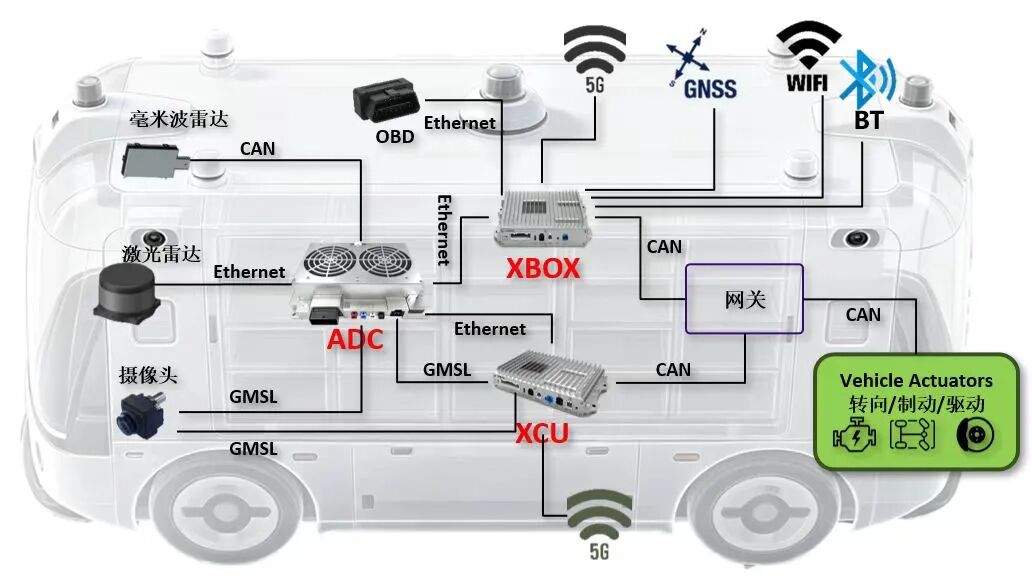
II. What is true integration? It is by no means a simple assembly of hardware.
Many people harbor a misconception that integration simply means housing multiple circuit boards within a single enclosure. In reality, a qualified integrated automotive-grade data unit achieves functional convergence at the foundational architectural level. It must simultaneously address four core metrics—communication reliability, positioning stability, data compliance, and automotive-grade safety—and a mature platform must possess the following four core capabilities.
(1) High-reliability, multi-scenario communication to establish a stable vehicle-to-cloud link. Autonomous driving and unmanned operational vehicles demand exceptional communication link stability; relying on a single link makes the connection vulnerable to interference in complex environments and creates a risk of disconnection. A superior integrated platform should support primary-backup link redundancy and seamless link switching to ensure the uninterrupted operation of remote monitoring, vehicle-to-infrastructure (V2X) coordination, emergency communications, and OTA services. Simultaneously, it should extend short-range communication capabilities to support in-vehicle multi-terminal networking and high-volume data exchange within the near-field environment.
(2) All-weather, centimeter-level high-precision positioning that overcomes the challenge of signal obstruction. Relying solely on satellite positioning often leads to failure in obstructed environments such as tunnels, underground parking garages, and urban canyons. By integrating RTK differential positioning with IMU-based inertial navigation, the system ensures continuous centimeter-level positioning output even when satellite signals are lost. Additionally, the integrated PPS (Pulse Per Second) timing function provides a unified time reference for the vehicle's various sensors and electronic control modules, resolving the persistent industry issue of time synchronization mismatches across multiple devices.
(3) Compliant local storage to meet mandatory regulatory requirements for intelligent driving. With the implementation of national standards for autonomous driving, the retention of event data has become a strict compliance requirement. The integrated unit must natively support DSSAD functionality and strictly adhere to the GB 44497-2024 standard, ensuring complete data recording and tamper-proof storage to provide a reliable basis for accident reconstruction, algorithm iteration, and compliance audits; simultaneously, it supports high-speed, high-capacity storage expansion to meet the need for continuous writing of high-bitrate perception data.
(4) Automotive-grade, reliable architecture designed for complex in-vehicle operating conditions. Factors such as intense vibration, wide temperature ranges, and compatibility with both 12V and 24V power systems place rigorous demands on hardware stability. Featuring an MCU+SoC dual-system architecture and ASIL-B functional safety design, the system enables fault detection and fault-tolerant self-recovery, ensuring long-term stable operation across diverse applications—including passenger vehicles, commercial vehicles, autonomous sanitation vehicles, mining machinery, and agricultural equipment.
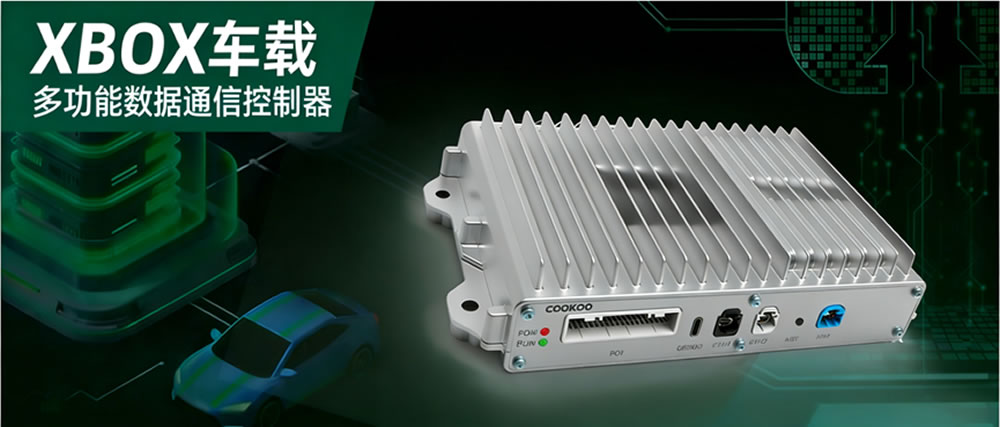
III. Industrial Implementation: Engineering Pathways for Integrated Hardware
The theoretical advantages of integration ultimately require validation through the deployment of mature products. Addressing the aforementioned industry pain points and practical project requirements, the Xbox series of automotive-grade integrated data communication units from CookooAI represents the tangible engineering realization of this integrated approach; the ATU103 multifunctional data controller, for instance, fully embodies this design philosophy by achieving the deep integration of communication, high-precision positioning, and DSSAD-compliant data storage.
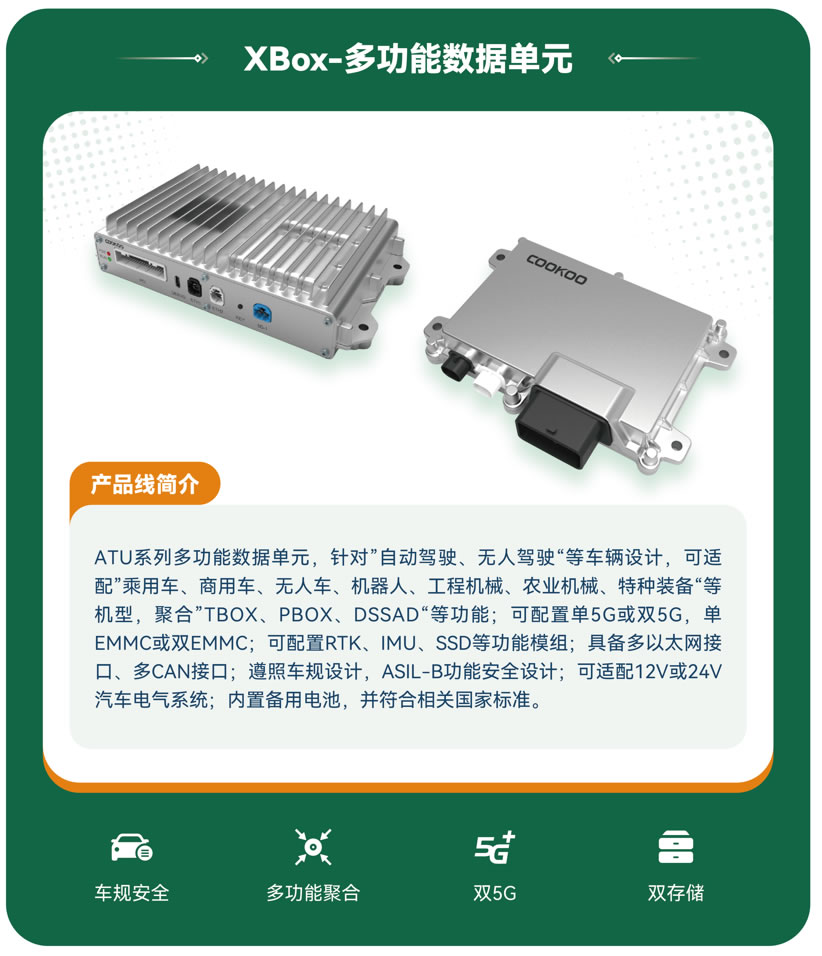
In terms of communication, the ATU103 supports single or dual 5G redundancy with automatic failover between primary and backup links, and incorporates Wi-Fi 6 for short-range networking, effectively meeting the reliability demands of remote operations for unmanned vehicles. Its positioning module utilizes an RTK+IMU fusion solution to deliver centimeter-level positioning around the clock, while PPS-based timing ensures system-wide synchronization. It features native DSSAD functionality compliant with national storage standards, and an M.2 NVMe SSD interface supports the high-speed storage of massive autonomous driving datasets. Regarding system safety, it meets ASIL-B functional safety requirements, supports 12V/24V vehicle power systems, and employs a wide-temperature, interference-resistant design suited to the harsh operating conditions of specialized vehicles.
Moving from hardware stacking to integrated integration is not only a change in the form of vehicle-mounted terminals, but also an inevitable trend in the evolution of the vehicle's electronic and electrical architecture. The integrated vehicle-specific data unit reduces the number of hardware, simplifies vehicle integration, and unifies the data base, effectively balancing the three major demands of cost, reliability and compliance.
Looking at the intelligent connected vehicle industry as a whole, future competition will not hinge on the performance of individual hardware components, but rather on the comprehensive capabilities of the vehicle-side data infrastructure. CookooAI’s Xbox product line will continue to evolve with a focus on integration, regulatory compliance, and high reliability; by refining its all-in-one, automotive-grade data units, the company aims to provide mature, stable in-vehicle hardware support for the large-scale deployment of autonomous driving.