category
Popular Reading
1. Autonomous Driving "Black Box": Understanding the Industry Value and Implementation Roadma
2. Announcement: CookooAI Officially Achieves Prestigious International CMMI Certification
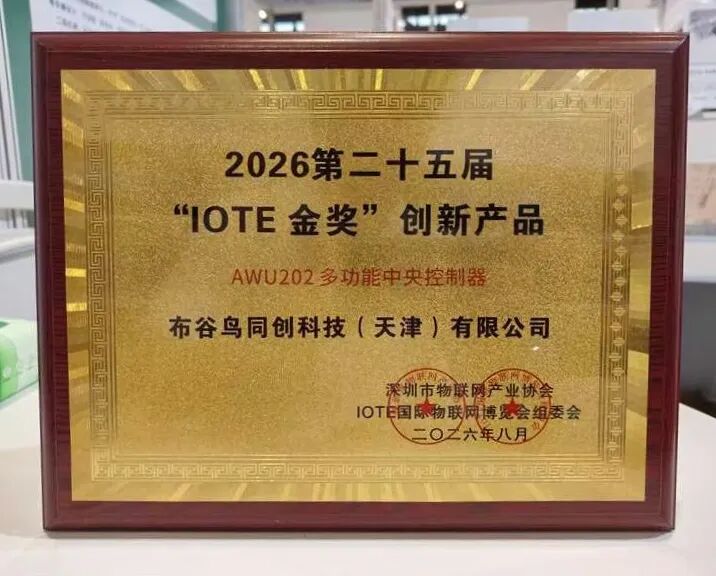
3. Great News | Honored at IOTE 2026 Shenzhen! AWU202 Wins IOTE Gold Award
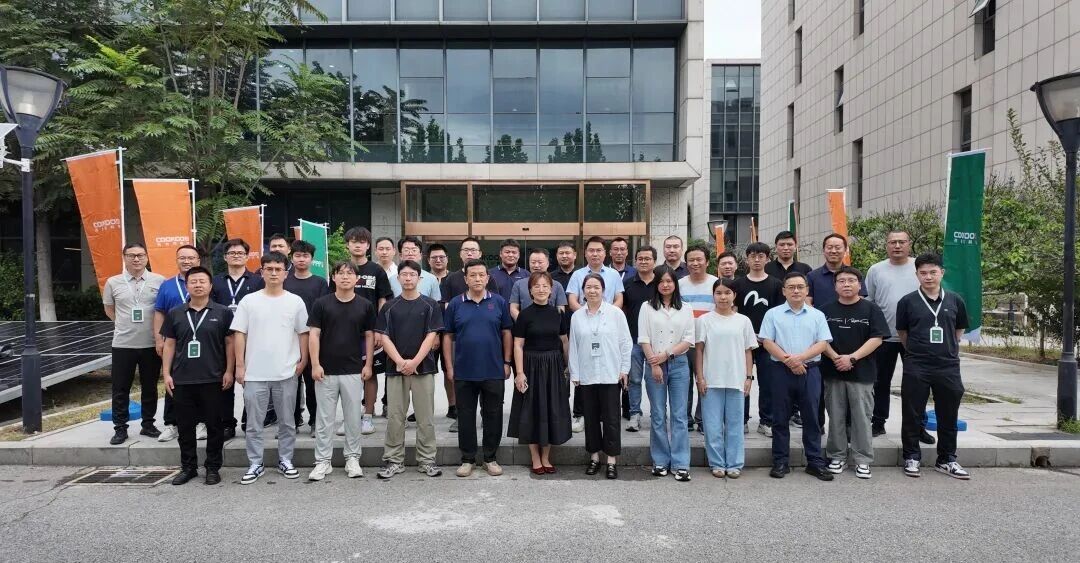
4. Co-developing Intelligent Control, Co-creating the Future: The 3rd CooKooAI Developer Community Offl
CookooAI continues to strengthen its three core competencies, providing dedicated service to industr
|
2026-08-06 15:24:22
|
0
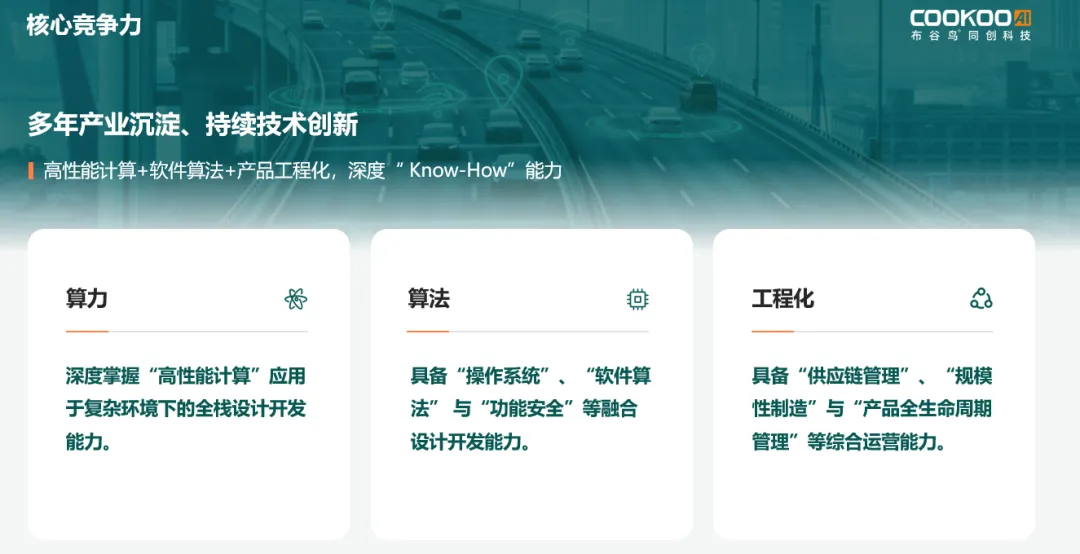
The barriers to the large-scale commercialization of embodied AI, physical AI, and reality AI lie within the entire value chain of technology deployment. Why choose CookooAI? We build a comprehensive competitive advantage through three core capabilities:
Across the various domains of embodied AI, physical intelligence, and real-world intelligence, the market has never lacked isolated technologies, prototype demos, or conceptual proposals. What is truly scarce is the comprehensive capability to transform laboratory technologies into commercial products that are mass-producible, replicable, and capable of long-term iteration.
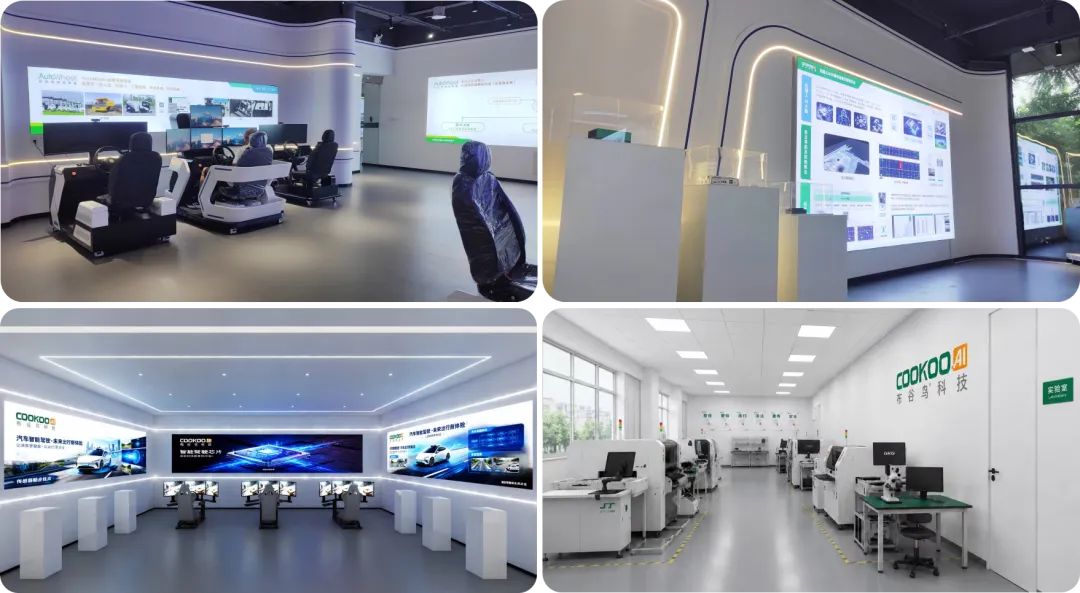
A common pain point across the industry is the fragmentation of technical systems; this often stems from teams focusing narrowly on either hardware development or algorithmic iteration, leading to a disconnect between R&D and engineering implementation that hinders the large-scale commercial deployment of high-quality technical solutions. CookooAI’s core competitiveness, however, is rooted in a deeply cohesive and progressive system of industry-grade know-how: full-stack high-performance computing design capabilities, the ability to integrate software algorithms with functional safety, and mass-production-ready engineering and operational capabilities. The deep integration of these three elements creates a core competitive advantage that sets the company apart from pure-play hardware manufacturers and algorithm-focused teams.
01 Computing Power: Going beyond mere hardware stacking to deeply cultivate full-stack high-performance computing designs for complex scenarios.
CookooAI possesses capabilities in the design and development of chip-level computing terminals and has mastered full-stack design expertise for high-performance computing in complex environments. Our process covers the entire lifecycle—from hardware architecture selection and interface adaptation to computing power scheduling, power consumption optimization, and environmental adaptability tuning. We have achieved a cumulative mass production volume of over one million units for our "ADM Series" edge computing modules. Designed for demanding real-world scenarios—such as automotive, industrial, mining, port, and outdoor operations characterized by temperature extremes, intense vibration, signal fluctuations, and high-concurrency multi-device environments—our computing terminal technology is standardized, modular, and process-driven. This enables rapid development and implementation, including custom hardware assembly, computing power allocation optimization, and load balancing tuning, across diverse processor platforms (both domestic and imported).
Relying on this set of underlying capabilities, our product lines such as "XCU - Robot AI Brain", "ADC - Autonomous Driving Domain Controller for Unmanned Vehicles", "XBOX - Multifunctional Data Communication Unit for Unmanned Vehicles", and "MEC - Universal AI Edge Computer" can stably carry autonomous navigation and multi-channel video encoding and decoding High-load tasks such as coding, remote real-time vehicle control, and high-frequency data storage and analysis can effectively solve the industry pain points of edge computing equipment such as "poor scene adaptation, dropped frames under working conditions, and unstable operation" and build a solid hardware computing base for all intelligent applications; 4 major series of products, more than 30 models, have served hundreds of partners.
02 Algorithms: Moving beyond standalone algorithm development to achieve system-level hardware-software co-design.
Centering on mission objectives, we achieve deep integration and hardware-software synergy between computing power and algorithms, preventing any disconnect between the two. We establish a foundation of reliable and trustworthy security by integrating underlying hardware and software. Furthermore, we provide comprehensive SDKs and development/debugging tools that serve as a platform for secondary development, enabling customers to rapidly iterate on algorithms and application software and avoiding the implementation gap where excellent algorithms fail to perform effectively in actual vehicle deployment.
Our strength lies in our integrated design and development capabilities spanning operating systems, high-level software algorithms, and system functional safety. We comprehensively empower our partners across the entire value chain—from low-level OS adaptation, driver debugging, and system resource scheduling, through mid-level autonomous navigation, path planning, remote control, and image stitching algorithm iteration, to high-level functional safety logic architecture, predictive fault analysis, and the implementation of emergency protection mechanisms—thereby enabling them to rapidly achieve fully self-developed, end-to-end solutions.
In operational scenarios such as autonomous driving, remote driving, autonomous operations, and data storage, this integrated capability fundamentally resolves issues like software-hardware compatibility conflicts, algorithmic latency or stuttering, and gaps in safety logic. It ensures the precision and flexibility of intelligent decision-making while employing an automotive-grade safety architecture to provide proactive protection against equipment failures, network fluctuations, and abnormal operating conditions. Additionally, the provision of a standardized SDK facilitates rapid adaptation and secondary development across diverse business scenarios.
03 Engineering Implementation: Moving beyond "armchair theory" to build end-to-end commercialization capabilities.
Successful R&D is merely the starting point; the ability to deliver at scale and with standardized, sustainable processes is what truly defines a company's industrial competitiveness. Bridging the gap between laboratory prototypes and mass-produced products relies on three core engineering capabilities: supply chain management, scalable manufacturing, and product lifecycle management.
First, we employ refined supply chain management. We have established a stable and controllable supply chain system for core components—such as computing chips, sensors, communication modules, and control hardware—enabling optimized component selection, strategic inventory stocking to mitigate risk, quality traceability, and cost control. This approach effectively avoids common industry issues like material shortages, batch-to-batch quality inconsistencies, and significant cost fluctuations, thereby laying a solid supply chain foundation for mass delivery.
Secondly, we possess large-scale, standardized manufacturing capabilities. Leveraging mature mass-production workflows and quality control systems, we have implemented a comprehensive process covering standardized product assembly, reliability testing, high/low-temperature aging, and operational simulation verification. By establishing our own facilities—including cleanrooms, Panasonic SMT lines, vacuum soldering units, flexible assembly lines, and testing laboratories—we have moved beyond small-scale workshop production. This enables us to deliver high-quality products in large volumes with consistent performance, meeting the industry's requirements for large-scale deployment.
Third, capabilities for full-lifecycle product management and operations. A complete closed-loop process is established, spanning initial concept definition, product R&D and iteration, and factory testing; through intermediate stages of project deployment, equipment O&M, and fault diagnosis; to the final stages of remote OTA updates, feature iteration, and data-driven optimization. Leveraging PLM systems enables full-lifecycle document management, while cloud-based management platforms facilitate comprehensive device status monitoring, batch device control, and operational data traceability—thereby ensuring long-term stable operation and continuous iteration and upgrades following product delivery.
04 Synergistic integration: building an inimitable industrial barrier
Computing power determines the product's upper limit, algorithms determine the precision of intelligence, and engineering determines the scale of deployment.
CookooAI’s core strength has never relied on leadership in a single product or technology; rather, it stems from a fully integrated, closed-loop capability driven by the deep synergy of three elements: full-stack computing power design, the convergence of software, hardware, and algorithms, and the ability to execute mass-production engineering. This is precisely why our product lines—including autonomous driving domain controllers for unmanned vehicles, AI brains for robots, and full-stack solutions for RDS (Remote Driving Systems) and DSSAD (Data Storage Systems for Automated Driving)—can rapidly adapt to and be deployed across diverse scenarios, vehicle types, and equipment, ranging from logistics and sanitation to mining, ports, industry, and agriculture.
We build a solid foundation through deep technical expertise and empower the industry with robust engineering capabilities. We consistently deliver highly reliable, mass-producible products and full-lifecycle support to enable the intelligent, large-scale commercial deployment of unmanned systems—driven by years of industry experience, continuous technological advancement, and a commitment to exceptional customer service.